Why You're Not Losing Weight Even in a Calorie Deficit
You're eating 1,500 calories a day. You're being "good." The scale won't budge. Sound familiar?
If you're stuck in a calorie deficit that doesn't seem to work, you're not crazy — and you're not broken. There are real, scientific reasons why the math feels wrong. Here's what's actually happening, and how to fix it.
1. You're Underestimating What You Eat
Studies show that people underestimate their daily calorie intake by 20-50%. That "small handful" of nuts? Probably 300 calories. The olive oil you cooked with? Add 200. The "tiny" piece of cake at the office? 400.
The math feels right because you're tracking what you remember, not what you actually ate. Even nutritionists underestimate their own intake.
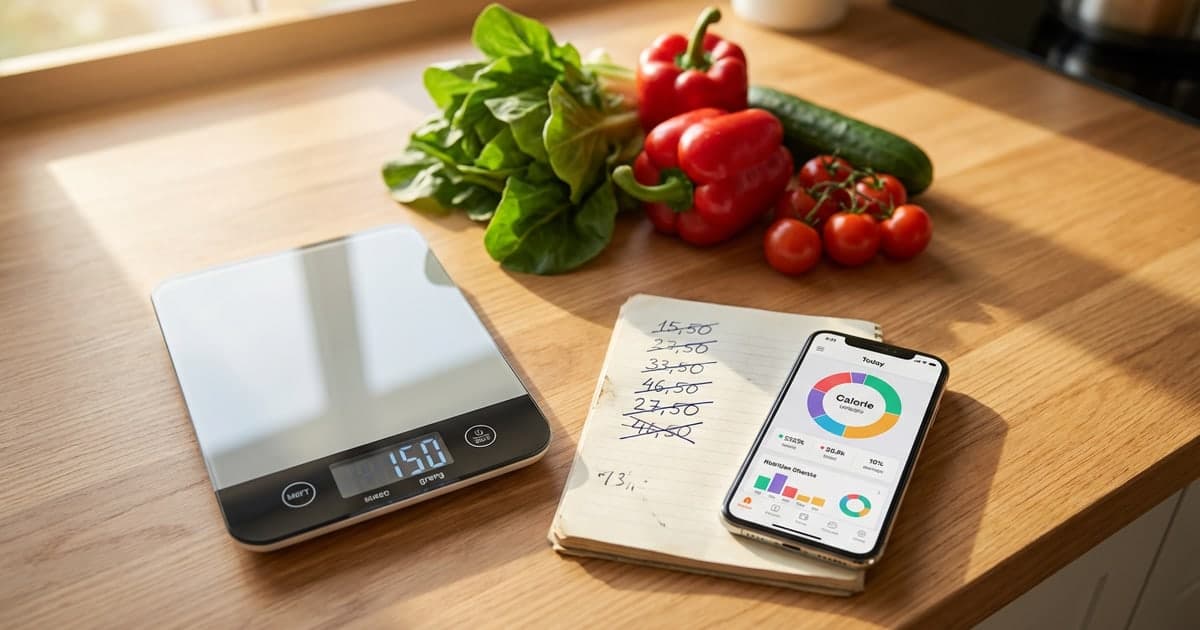
Fix: Photograph every meal — including snacks, drinks, and "just a bite." Apps like Calzy use AI to estimate portion sizes from a photo, removing the guesswork. You'll be shocked how often "1,500 calories" turns out to be 2,200.
2. Your Tracker Is Lying About Macros
Most calorie counters treat all calories as equal. They don't tell you that 500 calories of bread and 500 calories of salmon affect your body completely differently.
The salmon triggers satiety hormones that keep you full for 4+ hours. The bread spikes insulin, gets stored as fat, and leaves you hungry in 90 minutes. Same calories. Different outcome.
Fix: Track quality, not just quantity. Look for trackers that rate food on more than calories — protein density, fiber, processing level, and added sugar all matter as much as the number.
3. Hidden Sugars Are Sabotaging You
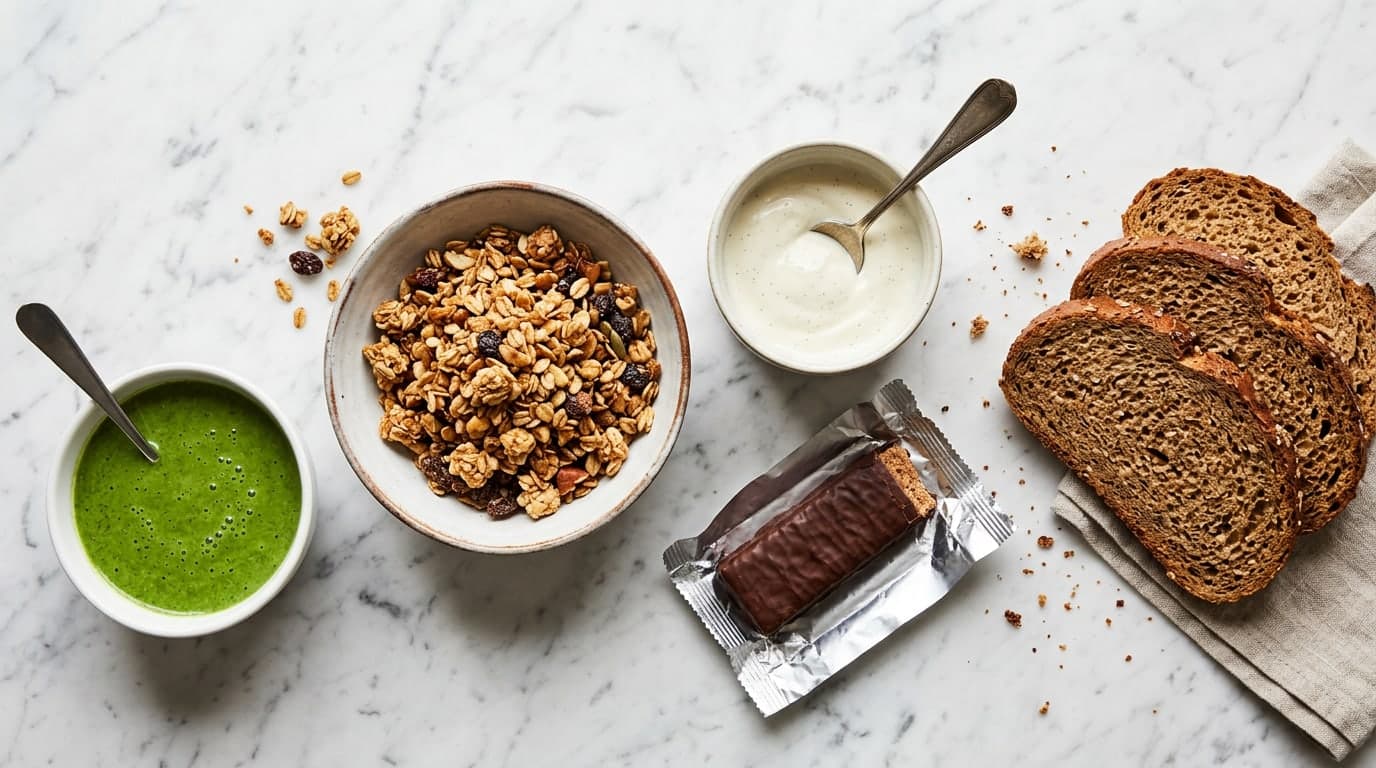
That "healthy" yogurt has 18g of added sugar. The granola bar: 14g. The smoothie: 35g. Salad dressing: 6g. Pasta sauce: 8g.
If you're consuming 60-80g of added sugar daily without realizing it, your body is in constant insulin surge mode — and stored fat won't budge.
Fix: Check ingredient labels for any word ending in -ose (glucose, fructose, dextrose, maltose) plus syrups. The first 5 ingredients tell the real story.
4. Ultra-Processed Foods Are Working Against You
A 2019 NIH study found that people eating ultra-processed foods consumed 500+ more calories per day than people eating the same nutrients in whole-food form. Even with identical macros on paper, ultra-processed foods make you eat more, store more fat, and crave more sugar.
The culprits: protein bars, "healthy" frozen meals, packaged snacks, sugar-free sodas, "low-fat" dressings.
Fix: Use a tracker that flags processing level (NOVA classification). Aim for meals that are at least 70% whole foods.
5. You're Not Eating Enough Protein
If you're under 1g of protein per pound of bodyweight (or 1.6g per kg), you're losing muscle, not fat. Less muscle = slower metabolism = harder weight loss.
Protein also has the highest thermic effect (your body burns 25-30% of protein calories just digesting them). So 200 calories of chicken effectively becomes 140 calories.
Fix: Front-load protein at every meal. Aim for 30-40g per meal, three times a day. Track it specifically.
6. You're Not Sleeping Enough
7 hours of sleep is the magic number. Below that, your body produces:
- More ghrelin (hunger hormone) — making you crave 300-500 extra calories
- More cortisol (stress hormone) — promoting belly fat storage
- Less leptin (satiety hormone) — so meals don't feel filling
You can be in a "perfect" calorie deficit and still not lose weight if you sleep 5 hours a night.
Fix: Prioritize 7-9 hours of sleep before optimizing your diet. Sleep is the cheat code nobody talks about.
7. You're in a "Diet Plateau" — Your Body Adapted
After 2-3 weeks in a deficit, your body downregulates metabolism by 10-20% to conserve energy. This is called metabolic adaptation, and it's why long diets stop working.
What was a 500-calorie deficit becomes a 200-calorie deficit, even though you're eating the same.
Fix: Take a "diet break" every 6-8 weeks — eat at maintenance for 5-7 days. This resets your hormones and resumes weight loss when you go back to a deficit.
The Real Fix: Track Smarter, Not Harder
The reason most calorie tracking fails isn't the math — it's the invisible variables: portion estimation, food quality, processing level, hidden sugars, and protein gaps.
Tools like Calzy's photo-based tracking address these by:
- Using AI to estimate portions accurately (no underestimating)
- Scoring food quality (Health Score 0-100), not just counting calories
- Flagging ultra-processed foods and 100+ harmful additives
- Tracking protein, fiber, and sugar as separate metrics
If you've been "doing everything right" and the scale won't move, it's not your discipline. It's your data. Fix the data, and the weight follows.
Ready to track smarter?
Snap a photo, get your calories, macros, and Health Score instantly. See what other trackers miss.
Download Calzy — It's Free